
Somewhere around 2 a.m., staring at the ceiling, most of us have the same thought: why is this so hard? Falling asleep feels like it should be automatic, but for a lot of people it's the least automatic part of the day. The good news is that sleep responds well to small, consistent changes - you don't need to overhaul your life, just give your body clearer signals that night has arrived.
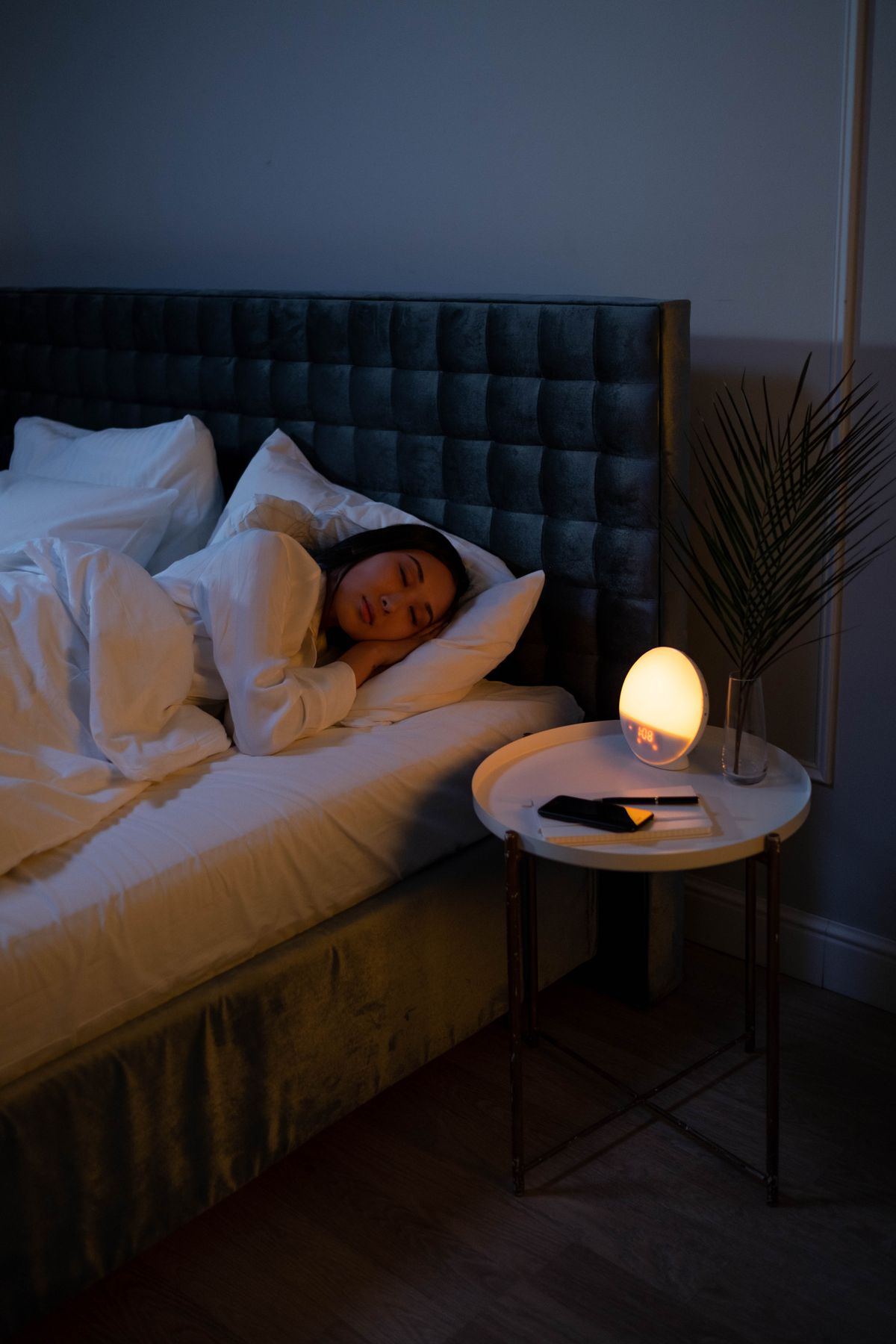
1. Keep a consistent wake-up time
It's tempting to focus on bedtime, but your wake-up time actually does more to anchor your body clock. Getting up at roughly the same time every day - weekends included - keeps your circadian rhythm steady, which makes falling asleep at night far more predictable. A few weeks of consistency does more for sleep quality than almost any other single habit.
2. Dim the lights an hour before bed
Bright light, especially the blue-heavy light from overhead bulbs and screens, tells your brain it's still daytime and delays the release of melatonin, the hormone that makes you feel sleepy. Switching to lamps, warmer bulbs, or even candlelight in the hour before bed gives your body a much clearer cue that it's time to wind down.
3. Get sunlight earlier in the day
The flip side of dimming lights at night is seeking out bright, natural light in the morning and early afternoon. Ten to twenty minutes outside shortly after waking helps set your internal clock, which in turn makes it easier to feel tired at the right time in the evening.
4. Keep the bedroom cool
Your core body temperature naturally drops as you fall asleep, and a warm room fights against that process. Most people sleep best somewhere around 18-20°C (65-68°F). If your room tends to run warm, breathable bedding and a fan can make a noticeable difference.
5. Build a short, boring wind-down routine
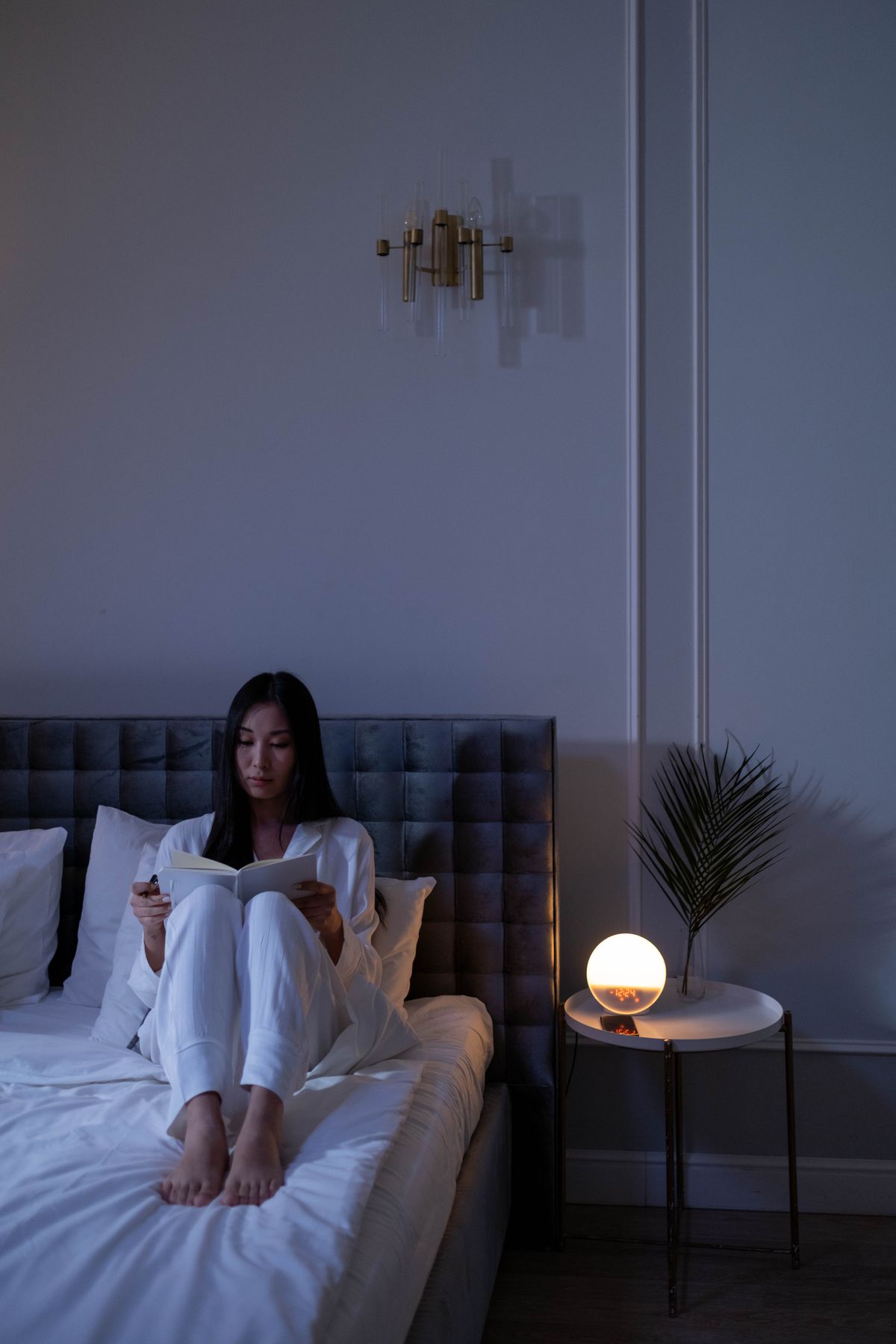
A routine works because it's repetitive, not because it's exciting: the same few steps in the same order, every night, so your brain learns to associate them with sleep. That might mean brushing your teeth, dimming the lights, reading a few pages, and getting into bed at roughly the same time each night. Boring, on purpose, is the whole point.
6. Watch caffeine later in the day
Caffeine has a half-life of around five to six hours, so a 3 p.m. coffee can still have real effects on your system at 9 p.m., even if you don't feel obviously wired. If you're a slow caffeine metabolizer or notice trouble falling asleep, an earlier cutoff - or switching to decaf after lunch - is worth testing.
7. Try a warm, calming drink instead
A warm, caffeine-free drink in the evening - chamomile, valerian, or just warm milk - can become part of the same wind-down signal as dimming the lights. The ritual of making it matters almost as much as what's in the cup: it marks a clear transition from "still going" to "getting ready for bed."

8. Get your phone out of arm's reach
It's not just the light - it's the habit of reaching for a phone the moment you're bored or restless in bed, which can turn ten minutes of scrolling into an hour. Charging your phone across the room, or at least out of easy reach, removes the temptation without requiring any willpower in the moment.
9. Reserve the bed for sleep
If you regularly work, scroll, or watch TV in bed, your brain starts associating the bed with wakeful activity rather than sleep. Where possible, save the bed for sleep (and rest), so that lying down becomes its own cue to relax.
10. Rethink what's actually going into your ears
A lot of people fall asleep to a podcast, an audiobook, or white noise, and that's a genuinely useful tool - but the delivery method matters more than people expect. Earbuds can be uncomfortable to sleep on and tend to work loose overnight, and a speaker across the room disturbs a partner who wants quiet. Some people find it easier with something that plays sound privately without sitting in or on the ears at all - a speaker made for exactly this, like the DreamCove™ Pillow Speaker, tucks flat under the pillow so nothing touches your head, which is a small but real difference at 1 a.m. when comfort is the whole ballgame.
None of this needs to be perfect
You don't need all ten changes at once, and you don't need to get any of them exactly right. Pick one or two that sound realistic for your life right now - a consistent wake time and dimmer evenings are a solid place to start - and give them a couple of weeks before judging whether they're working. Sleep responds to patterns more than any single perfect night, so the goal is just to make the pattern a little kinder to yourself.